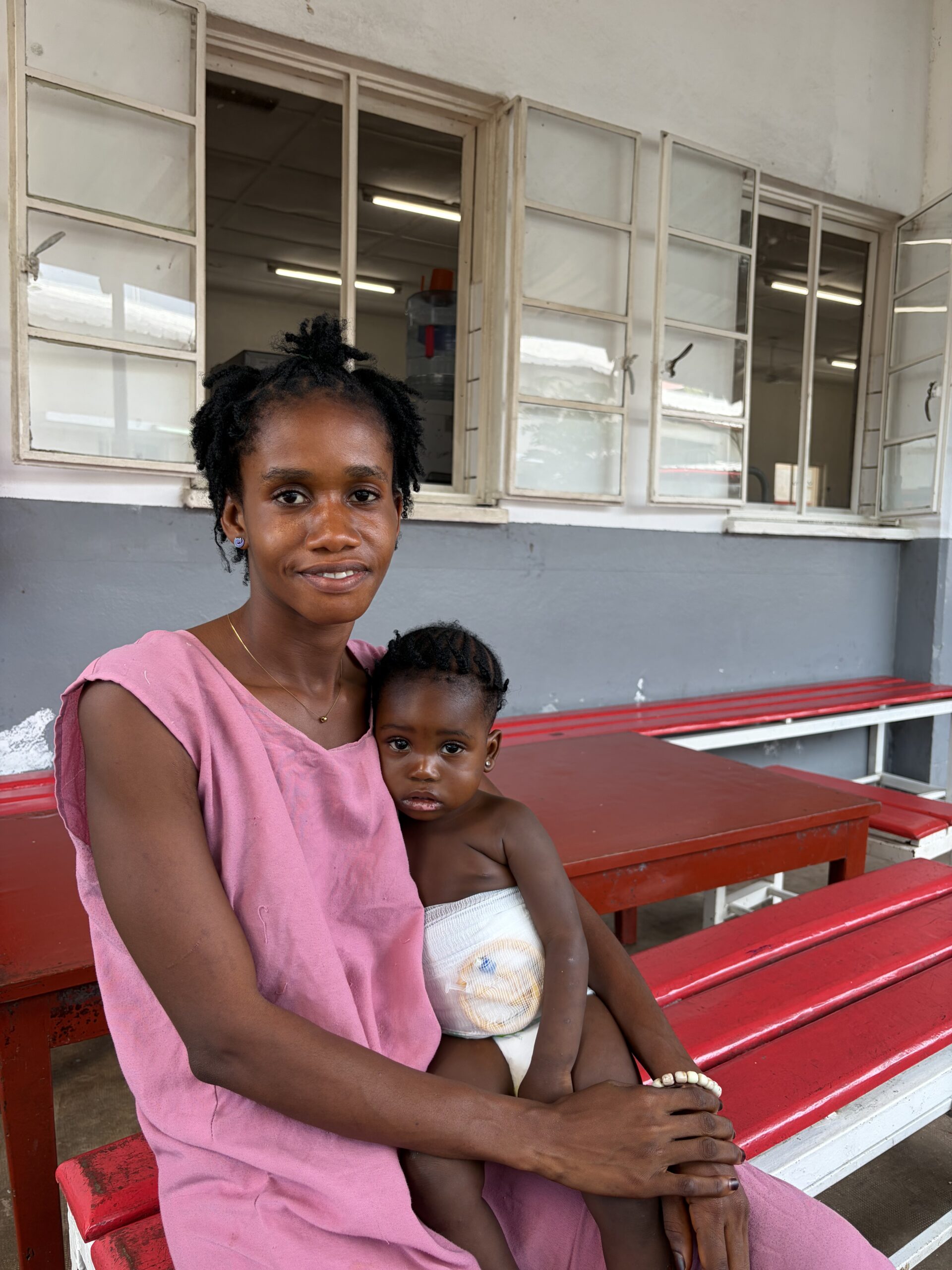
Isatu Kamara first arrived at the EMERGENCY Surgical Centre in Goderich, Sierra Leone, in an emergency. Her one-year-old baby, Isatu Kabia, had accidentally eaten caustic soda – also known as lye – mistaking the white, crystalline substance for sugar.
The chemical burn had begun immediately, damaging the little girl’s lips, mouth and oesophagus. Her mother rushed her to the nearest health centre, but the rural clinic did not have the resources to provide the care they needed.
They were referred to the EMERGENCY hospital: the only facility in the entire country with a programme dedicated to treating caustic soda injuries.
“I couldn’t believe everything was for free: the procedures, the food, even the tools I needed to care for my child at home,” Isatu Kamara tells us.
Across Sierra Leone, caustic soda is commonly used in homemade soapmaking. Its sales provide economic opportunities in a country where over 87% people have no access to basic sanitation and more than 70% of the rural population are living in conditions of poverty (World Bank).
Yet, the chemical is incredibly harsh and can cause burns on contact with skin. People often mistake caustic soda for sugar or salt, or after it’s been dissolved clear and odourless, for drinking water. Children under five, like Isatu Kabia, are the most at risk.
Recognising this issue as a major public health crisis, in 2005 EMERGENCY launched a treatment programme for surgical intervention as well as long-term social and rehabilitative support for people injured by caustic soda.
This was the family’s fifth visit to the EMERGENCY hospital. During that very first emergency admission, surgeons assessed baby Isatu’s injuries and gave her a feeding tube directly to her stomach, ensuring the young child could continue to eat and grow while she healed.
Her mother has been attending special health promotion sessions, practising how to turn their everyday meals into the right consistency. The fine mesh sieve, sanitary bowls and plastic syringe she needs were provided directly by EMERGENCY’s soda treatment programme.
“Thanks to this support, I’m advocating about the dangers of caustic soda within my community,” Isatu Kamara says. “My daughter’s injuries are the clearest evidence of what can happen when something goes wrong.”
Meanwhile, at each follow-up visit surgeons have been gradually dilating Isatu’s oesophagus, helping damaged tissue to safely stretch and have the chance to swallow again.
It’s a long journey for the family to reach Goderich for these sessions: their home in rural Sierra Leone is a three-hour journey away, and fuel is expensive. Missing or delaying a visit, however, can set back progress, and Isatu Kamara is determined to make sure her daughter receives the care she needs.
Recently, 15-month-old Isatu has begun to eat soft foods by mouth again – a huge step in her recovery. Her mother is taking it as a positive sign for the future.
“I feel really optimistic. My daughter can grow up, go to school, have a normal life.”
—
The Randal Foundation are proud to strategically partner with EMERGENCY UK to support the provision of free high-quality pharmaceuticals and medical supplies at EMERGENCY’s Goderich Surgical Centre in Sierra Leone, as well as hospitals across Afghanistan and Uganda.
Photo credits – EMERGENCY archive