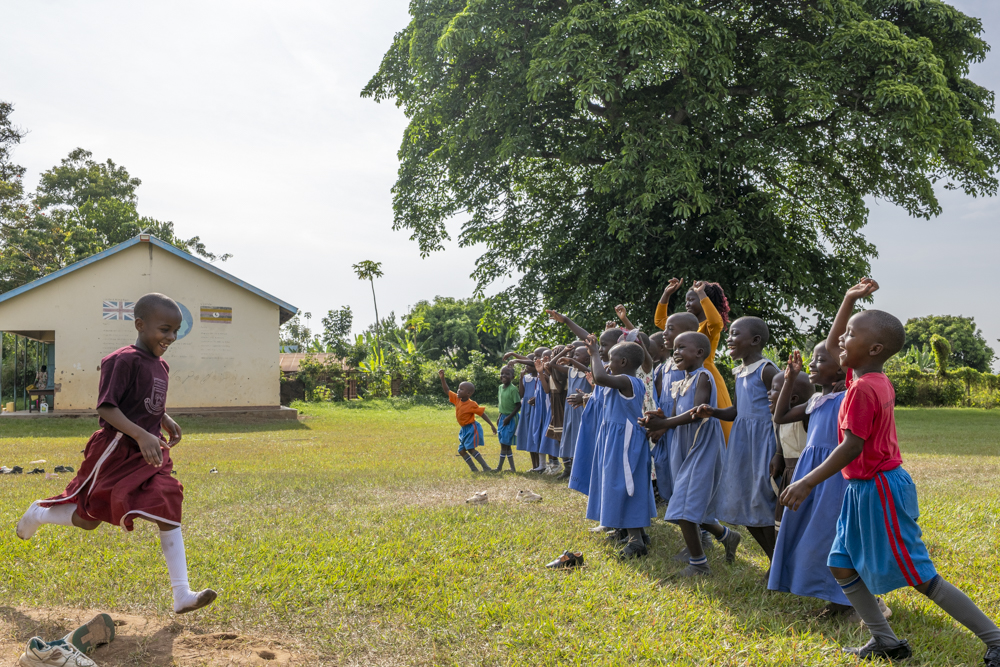
In rural Uganda extreme poverty is a reality. 90% of 10 year old children cannot read a simple sentence or do simple arithmetic. Primary schools are dilapidated. Parents keep their children at home to help with chores.
The Randal Foundation have partnered with RedEarth Village Uganda to improve access to quality education, allowing children to aspire and achieve their ambitions.
The Randal Foundation are proud to support RedEarth Village by providing funding needed to construct new 8 cubicle girls’ toilet blocks at St. Michael’s Girls’ School and Lubira Primary School in rural eastern Uganda. These new facilities will improve the health, dignity and educational opportunities of 500 girls by providing clean, safe and private sanitation.
Many girls currently face dilapidated and inadequate toilet facilities, leading to illness, absenteeism and difficulties managing menstruation with dignity. The new toilet blocks will create a healthier school environment, helping girls attend school more regularly, participate confidently in lessons and achieve their full academic potential.
The project also marks an exciting step towards more sustainable school construction. During the build, engineering students from the University of Bath will spend six weeks working alongside local builders and RedEarth Village Schools to introduce interlocking stabilised soil block (ISSB) technology. Made from soil and requiring significantly less cement than conventional bricks, ISSBs reduce construction costs, lower environmental impact and can be produced using local materials and skills.
Working together with Ugandan builders, the students will help transfer knowledge and practical skills that will enable future classrooms and school facilities to be constructed more affordably and sustainably. This collaboration will leave a lasting legacy long after the project is complete.
By supporting this project, the Randal Foundation is doing far more than funding two toilet blocks. It is helping remove one of the greatest barriers to girls’ education while supporting innovative, environmentally sustainable construction methods that can benefit rural schools for many years to come. The Foundation’s investment will improve lives today and help build stronger, healthier and more resilient school communities for the future.